Marching into more 2026 drug price changes
As a non-profit, we at 46brooklyn have made it our goal to provide insights into U.S. drug pricing data available in the public domain based upon the figures we’ve gathered over the prior month. Amidst the constant noise about drug prices, these reports act as a reality check of what’s actually happening in the market. This month, we look at what happened in March 2026.
Drug Pricing News
Weight loss medications, specifically glucagon-like peptide-1 receptor agonists (or GLP-1s for short), have taken over the headlines for the last several years. These medications revolutionized treatment options for both type 2 diabetes and weight loss, and they aren’t stopping there, with new indications like obstructive sleep apnea (OSA). GLP-1s have shown potential promise in other areas, including liver disease, Alzheimer’s disease, addiction and substance abuse disorders, cardiovascular disease(s), as well as kidney disease.
Since our last report, two GLP-1s for weight loss have entered the market, Wegovy HD and Foundayo. Wegovy HD is 7.2mg of injectable semaglutide, which is a much higher dose than the currently approved 2.4mg maintenance dose of Wegovy. This new high dose of Wegovy has shown 21% weight loss at 72 weeks. Foundayo is a new oral tablet from Lilly that will compete directly with the Wegovy oral tablet. This new oral product is available in six different strengths (0.8mg, 2.5mg, 5.5mg, 9mg, 14.5mg, and 17.2mg) and has shown on average a loss of 27 lbs when the highest dose is used. Even though these products were just launched, the FDA is already calling Foundayo into question about its effect on the liver. This could be because Foundayo was the fastest approval of a new molecular entity under the Commissioner’s National Priority Voucher (CNPV) pilot program.
If you are unfamiliar with the CNPV Pilot Program, it is a program that launched almost one year ago in June 2025 that is designed to quickly review medications that are aligned with national priorities. There are five priorities that can qualify a medication, including a public health crisis, innovative breakthrough therapy, a large unmet medical need, onshoring and supply chain resilience, and affordability. Medications approved for the CNPV Pilot Program can expect an ultra-fast timeline of one-to-two months as a target versus other programs that can take six or more months. There have only been five medications approved through this program, including Foundayo. The others that have been approved include Augmentin XR on 12/9/25, Hernexeos on 2/26/26, Tec-Dara on 3/5/26, Wegovy HD on 3/19/26, and then Foundayo on 4/1/26. Although medications are being approved at relatively lightning speed, the FDA vows that safety is not being compromised. FDA approvals in some situations such as a cancer patient or a treatment area with limited options make sense to approve quickly, but the recent weight loss medication approvals, especially when others are readily available, may prove to be controversial depending on how Foundayo goes.
People don’t realize or think that GLP-1s are considered peptides, which is why we bring this up, as peptides have been all the rage. When people think of peptides, the first thing that comes to mind are adjectives such as health, wellness, or recovery. Peptides have “chemical” sounding names, like BPC-157 or AOD-9604. These products are not FDA-approved but are being used by millions of people in the United States, although the exact number is hard to determine. In July, the FDA will ask a panel of outside advisors to review seven peptides to potentially be added to a list of 503A bulks that compounding pharmacies can safely produce. We will continue to keep a pulse on this subject as it gains traction (and if we can get any pricing information about these products).
The Drug Pricing Cliff Notes
There was a net (combined increases minus decreases) of 10 brand drug list price increases in March, with price change percentages ranging from an increase of 2.0% (Keytruda) to an increase of 10.0% (mRESVIA). Typically, we see price changes all over the board, some of which can be just worth a few hundred dollars, whereas others are hundreds of millions of dollars, or in some rare instances billions of dollars. In March, we have no brand-name medications with a price decrease and only 10 branded medications with increases of up to 10.0%. However, depending on the price of a medication, even a small overall percentage increase could be substantial enough to be thousands or even millions of dollars compounded over time.
Some of the biggest and/or most interesting movers to take note of for March 2026 were:
Keytruda Solution for injection (2.0% increase; $712 million gross Prior Year Medicaid Expenditures, or PYME)
Duvyzat oral suspension (4.0% increase; $139 million PYME)
Byooviz Solution for injection (6.5% increase; $N/A PYME)
mRESVIA Suspension for injection (10.0% increase; $N/A PYME)
BCG VACCINE Lyophilisate for solution for injection (4.0% increase; $N/A PYME)
Some standout price increases are for medical conditions including cancer (Keytruda), eye disease (Byooviz Solution for injection), vaccines (mRESVIA, BCG VACCINE), and genetic disorder(s) (Duvyzat).
On the generic side of the coin, year-over-year (YoY) generic oral solid price deflation is at -13.4%. Many times, we can find a trend in the data when looking at brand price changes in Brand Drug List Price Change Box Score, although it can be hard to identify trends in the drug pricing data especially early on in the year. But some trends continue to include therapeutic areas such as specialty medications and various injectable medications.
What we saw from brand-name medications in March
1. A relatively stable but historically erratic number of list price increases for brand drugs
There were a total of 10 brand-name medications that saw wholesale acquisition cost (WAC) price increases in March, which is featured and contextualized in our Brand Drug List Price Change Box Score. This is a similar number of increases compared to what we have seen with the previous months of March, and the most notable trend for March is that it can be quite erratic (at least for the last few years) with around 10 to 60 brand name drug price increases.
Price changes this month ranged from 2.0% to 10.0% of the prior year gross Medicaid expenditures.
As a reminder, brand price increases in Medicaid are largely held in check thanks to the Medicaid Drug Rebate Program (MDRP), which includes rebate penalties for drug price increases that occur faster then the rate of inflation. Medicare now has similar cost containment provisions. Commercial employers and cash-paying patients may lack protections from price increases – especially those that occur faster than the rate of inflation.
This is one of a number of reasons that solely analyzing brand list price changes provides an incomplete picture of what’s really happening with brand manufacturer economics, thanks to the growing lot of opaque rebates, discounts, and giveaways that drugmakers shave off those list prices. But alas, until drugmakers, PBMs, insurers, wholesalers, 340B covered entities, specialty pharmacies, and rebate aggregators make more granular data on net prices public, we’ll continue working with what we’ve got.
2. Brand price trends over time
To help contextualize brand-name drug list price increase behavior, we find it beneficial to review past trends. In comparison to the data from prior months of March, this year seems to be decently close with March 2025, which had 9 (combined increase and decreases) branded price changes. Looking at past trends, March is a month where there have inconsistently been around 10 branded price changes, with the total this March being in line with the last few years’ worth of data.
The highest number occurred four years ago in March 2022 with 64 net branded price changes whereas the lowest was in March of 2025, when there were only 9 price changes.
To put it into a more recent perspective (over the last five years) in March 2024, there were a net (increases and decreases) of 24 medications, 12 in March 2023, 64 in March 2022, 11 for March 2021, and 17 in March 2020.
Moreover, when further examining our brand drug box score visualization, we continue to see March being the time of year where there is a small amount of change for brand price increases with a also a low number of brand price decreases.
So far, for 2026, we are up to 969 net brand drug price increases through March. Of the drugs that took increases so far this year, the median price increase has been 4.0% — a percentage that has not fluctuated much since 2019.
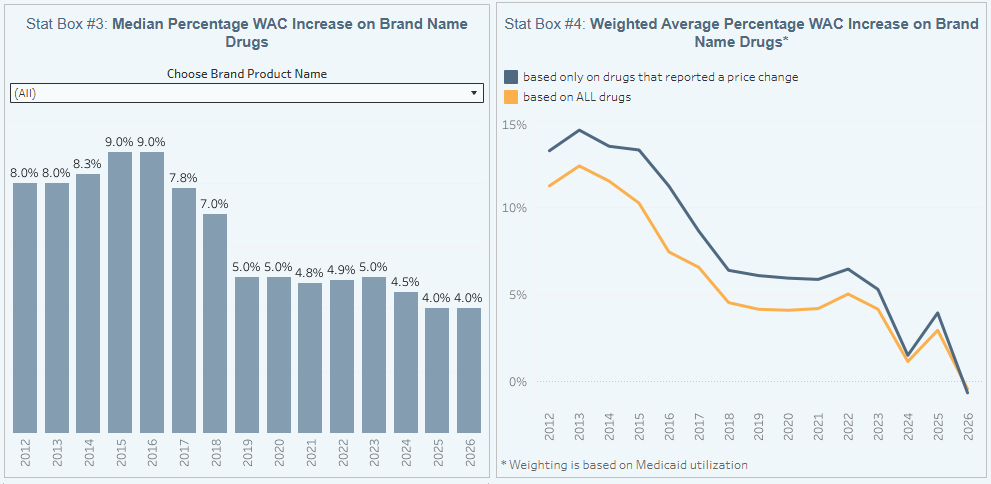
Figure 1
Source: Elsevier Gold Standard Drug Database, CMS State Drug Utilization Data, 46brooklyn Research
3. Brand drug list price changes worth taking note of in March
We identify drugs worth taking note of in a couple different ways. Primarily, we look for medications with a lot of gross prior year Medicaid expenditures (PYME). We next look for drugs with large pricing changes (+/- 10%). And finally, we look for drugs that are interesting for us either because we’ve previously written on them or because we find them of unique clinical value. This month, when looking for these drugs in the brand arena there are several worth mentioning:
Keytruda solution for injection (pembrolizumab) is a programmed death receptor-1 (PD-1)-blocking antibody indicated in 40 different cancer types.
This medication took an increase in WAC of 2.0%, impacting $712 million in gross prior year Medicaid expenditures (PYME).
An announcement for Keytruda as of June 17, 2024, indicated that the medication had received their 40th FDA indication. It’s no surprise that a medication that has 40 different cancer indications and 19 different tumor types is one of the world’s best-selling drugs in pharmaceutical history. Keytruda has generated $31.7 billion in sales for 2025.
Duvyzat oral suspension (givinostat) is a histone deacetylase inhibitor indicated for the treatment of Duchenne muscular dystrophy (DMD) in patients six years of age and older.
This medication saw an increase in WAC of 4.0%, which resulted in an additional $139 million in gross prior year Medicaid expenditures (PYME).
In March, new data about Duvyzat was presented at the annual Muscular Dystrophy Association (MDA) Clinical and Scientific conference. The presentation(s) from the manufacturer highlighted how Duvyzat shows DMD benefits in boys 6 to 17 years of age in a Phase 3 clinical trial. In 179 male participants, even in low doses, Duvyzat was associated with functional gains. This recent positive data could be why we see the price of the medication increasing slightly but still yielding a potential of $139 million in gross PYME.
Byooviz solution for injection (ranibizumab-nuna) is a vascular endothelial growth factor (VEGF) inhibitor indicated for the treatment of patients with:
Neovascular (wet) Age-Related Macular Degeneration (AMD)
Macular Edema Following Retinal Vein Occlusion (RVO)
Myopic Choroidal Neovascularization (mCNV)
This medication experienced an increase in WAC of 6.5%, but we are unsure of the dollar amount in gross prior year Medicaid expenditures (PYME).
We have heard rumblings that some patients have been experiencing issues getting Byooviz. This medication is the FDA-approved biosimilar to Lucentis; however, it cannot be used for two of the indications that Lucentis is FDA approved for, which are Diabetic Macular Edema (DME) and Diabetic Retinopathy (DR). Some of the explanation around drug availability according to Medfinder and Fierce Pharma include a ”contraction of the U.S. branded market” for anti-VEGF drugs, as doctors are prescribing less expensive alternatives, such as Avastin. Overall, there is a growing incidence of eye disorders, but there has been a downturn in patient access program funding for these expensive eye treatments.
mRESVIA Suspension for injection (Respiratory Syncytial Virus vaccine) is a vaccine indicated for active immunization for the prevention of lower respiratory tract disease (LRTD) caused by respiratory syncytial virus (RSV) in:
Individuals 60 years of age and older.
Individuals 18 through 59 years of age who are at increased risk for LRTD caused by RSV.
This medication had an increase in WAC of 10.0%, impacting an increase of $N/A in gross prior year Medicaid expenditures (PYME).
A developing trend that deserves some recognition is that any time there is positive data released by a manufacturer or clinical trials that show impactful results, you will most certainly see the price of the medication increase. mRESVIA is a testament to this (as well as several others in this month’s report), as the manufacturer Moderna is presenting positive Phase 3 data on revaccination in addition to a positive opinion from the European Medicines Agency (EMA).
BCG VACCINE Lyophilisate for solution for injection (iloperidone) is an attenuated, live culture preparation of the Bacillus of Calmette and Guerin (BCG) strain of Mycobacterium bovis.
This medication experienced an increase in WAC by 4.0%, impacting an increase of $N/A in gross prior year Medicaid expenditures (PYME).
What we saw from generic medications in March
4. A slightly favorable, unweighted price change picture
Each month, we look at how many generic drugs went up and down in the latest month’s survey of retail pharmacy acquisition costs (based on National Average Drug Acquisition Cost, NADAC), and compare that to the prior month (Figure 2).
Basically, the quick way to read Figure 2 is to look for orange bars that are taller than blue bars to the left of the blue line, and exactly the opposite to the right of the line. That would indicate a good month – more generic drugs going down in price compared to the prior month, and less drug prices going up.
Figure 2
Source: Data.Medicaid.gov, 46brooklyn Research
In looking at the above, for every generic drug that increased in price this past month, 1.4 decreased in price – a slightly favorable view of generic drug price decreases. But as usual, take this unweighted price change analysis with a grain of salt. To really make heads or tails of all of these pricing changes, let’s weight these changes.
5. Weighted Medicaid generic drug costs come in at $16 million in deflation
The purpose of our NADAC Change Packed Bubble Chart (Figure 3) is to apply utilization (drug mix) to each month’s NADAC price changes to better assess the impact. We use the last full year of Medicaid’s drug mix from CMS to arrive at an estimate of the total dollar impact of the latest NADAC pricing update. This helps quantify what should be the real effect of those price changes from a payer’s perspective (in our case Medicaid; individual results will vary).
The blue bubbles on the left of the Bubble Chart viz (screenshot below in Figure 3) are the generic drugs that experienced a price decline (i.e. got cheaper) in the latest survey, while the yellow/orange/red bubbles on the right are those drugs that experienced a price increase. The size of each bubble represents the dollar impact of the drug on state Medicaid programs, based on utilization of the drugs in the most recent trailing 12-month period (i.e. bigger bubbles represent more spending). Stated differently, we simply multiply the latest survey price changes by aggregate drug utilization in Medicaid over the past full year, add up all the bubbles, and get the total inflation/deflation impact of the survey changes.
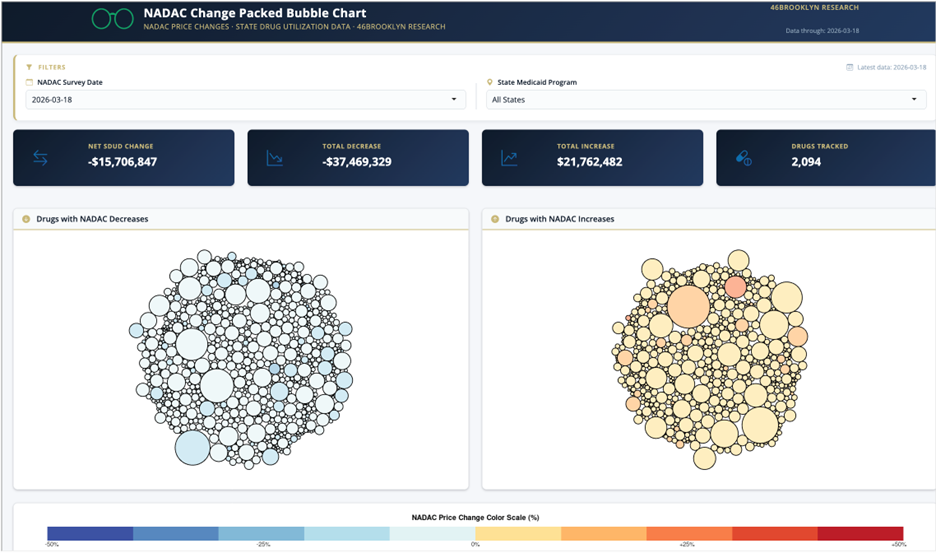
Figure 3
Source: Data.Medicaid.gov, 46brooklyn Research
Overall, in March, there was $22 million worth of inflationary drugs, with an offset of $37 million of deflationary generic drugs, netting out to approximately $15.7 million of generic drug cost deflation for Medicaid.
These numbers are a bit different than what we saw in February where there was around $9 million in inflationary costs with $37 million in deflationary costs netting out to approximately $58 million.
6. Year-over-year generic oral solid deflation at 11%
Ever since June 2020, we have been tracking year-over-year generic deflation for all generic drugs that have a NADAC price. We once again weight all price changes using Medicaid’s drug utilization data. This month, deflation on oral solid generics and all generics was at 11% and 9%, respectively (Figure 4). If you are a purchaser of generic drugs, an increase in this metric is ideal as it means costs are declining. This is right in line with the NADAC packed bubble chart, which also showed the cost of generic drugs decreasing. Businesses generally enjoy it when their input costs go down.
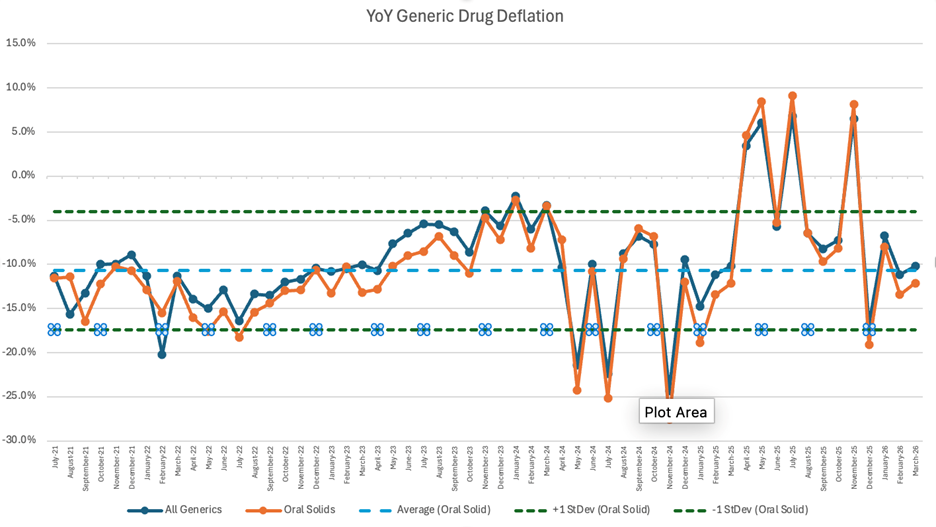
Figure 4
Source: Data.Medicaid.gov, 46brooklyn Research
7. Top/notable generic drug decreases this month
For March, the drug price decreases (as measured by NADAC) total $37 million in deflation. After reviewing the various sizes and colors that compromise this month-over-month decrease there are some notable decreases.
For the generic drug price decreases, there are a few medications that showed up in the February data (or before) and are presenting again, as well as some new ones that have popped up this month. It can be typical when you see one strength of a generic medication that other strengths may also be scattered either nearby or throughout the same packed bubble chart.
The largest outliers in the packed bubble chart this month include ivabradine 7.5mg, which decreased in price by -22.%. For the last two months, this 7.5mg strength, as well as the 5mg tablet, presented in the data with price decreases. In January, ivabradine 7.5mg had a price decrease of -21% and last month it had a decrease of -26%.
New outliers this month include isradipine 5mg capsule at -24.4%, fluphenazine 2.5mg tablet at -17.8%, and tetracycline 250mg capsule at -18.8%.
Although we have reported on varying price decreases, one thing that remains unchanged is that ivabradine is an oral tablet used to treat heart failure with reduced ejection fraction. The 7.5mg tablet this month took a price decrease by -22%. Although for the last two months, we reported that the SHIFT clinical trial showed adding ivabradine to the standard treatment for heart failure significantly improved outcomes, a more recent clinical trial with ivabradine, the RECOVER-AUTONOMIC clinical trial, did not. The RECOVER-AUTONOMIC clinical trial, was testing to see if ivabradine could help adults who developed postural orthostatic tachycardia syndrome (POTS) after having COVID-19. Participant surveys showed that ivabradine did not significantly improve POTS symptoms in adults with long COVID POTS, but it did reduce heart rate.
Isradipine is an oral medication used to treat high blood pressure and it decreased by -24.4%.
Fluphenazine is an oral medication used to treat psychotic disorders and decreased by -17.8%. Fluphenazine was first formulated in the 1950s under the brand name Prolixin during a time when mental health disorders, especially schizophrenia, were considered to be taboo. This medication is a 1st generation antipsychotic, which is an older drug class and sadly has fallen out of favor in terms of standard treatment options due to the introduction of newer or 2nd generation antipsychotic medications. Based on this information it makes complete sense why this medication decreased in price.
Tetracycline is an oral medication for the treatment of several different types of bacterial infections, and this medication decreased by -18.8%. Tetracyclines are an older class of antibiotics but have recently started to see some interesting changes including new products in this therapeutic area as well as varying new uses. For example, Nuzyra is a newer tetracycline antibiotic that was approved in 2018. Based upon this medication class receiving some newfound attention, it only makes sense that some of the first approved products will start to see a decrease in drug pricing due to antibiotic resistance and replacement by newer products.
8. Top/notable generic drug increases
On the increase side of things, notable this month (just like last month) is that only a few generic drug increases were darker in color, which means percent changes were on the lower end of the scale — with a couple exceptions. For example, we usually start this section off by noting the most impactful increases of 50% or above but there aren’t any with that high of a percentage of change.
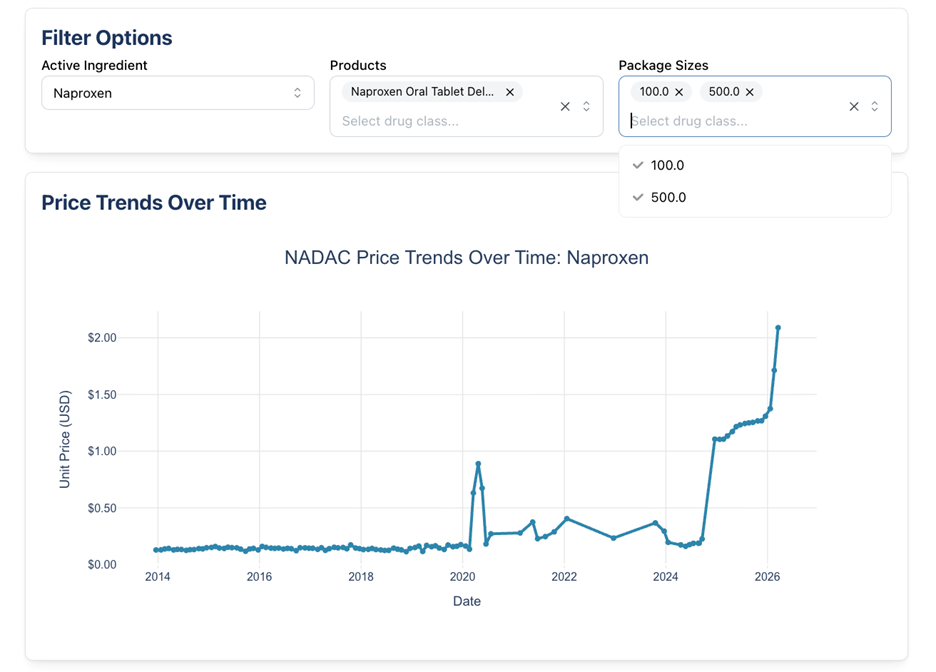
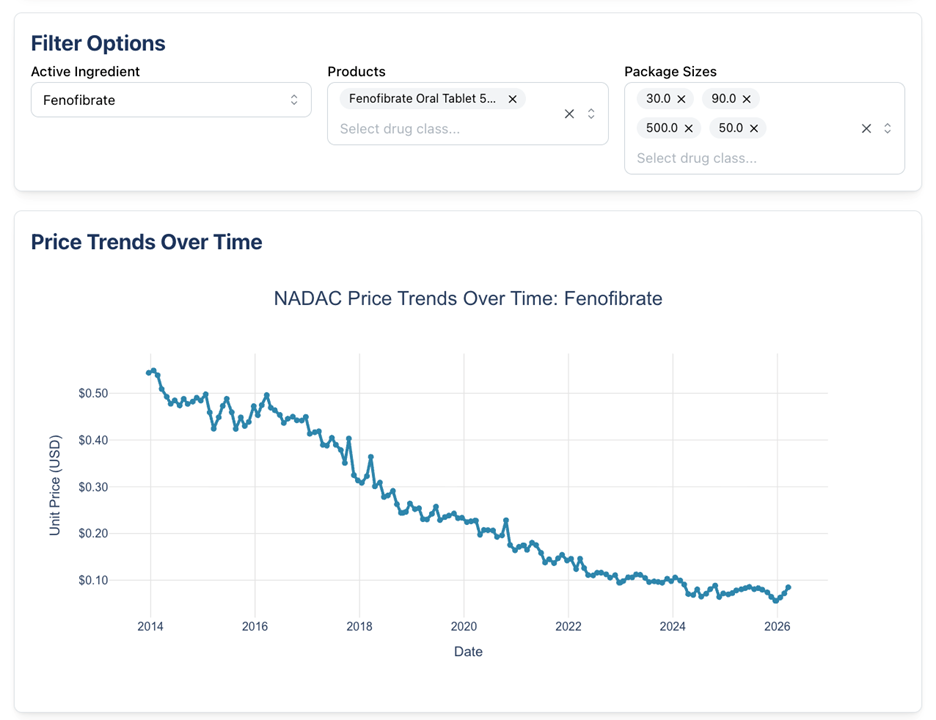
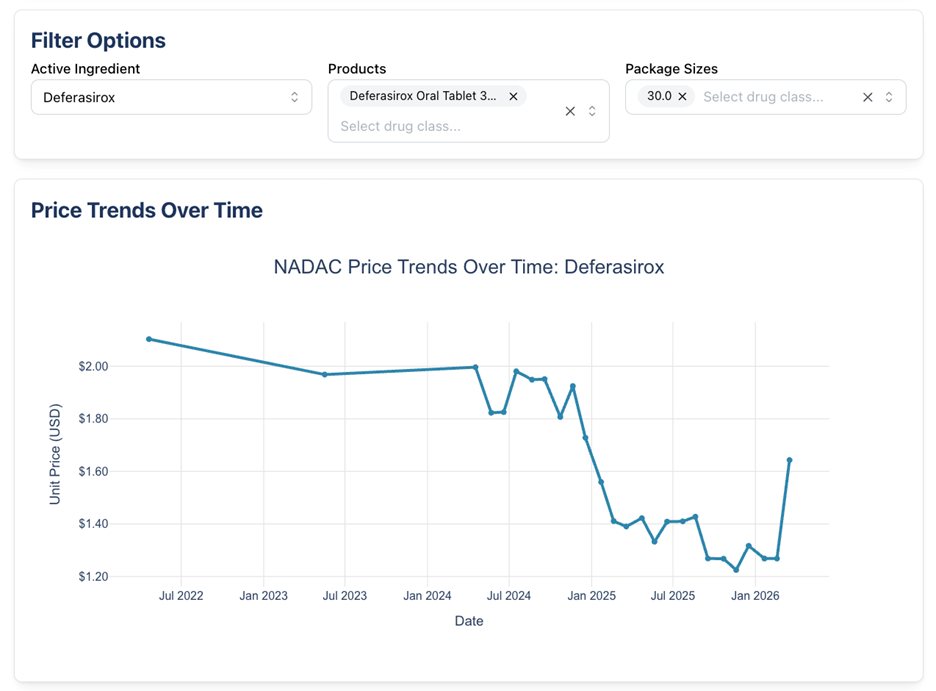
The few generic medications with the highest increases include Deferasirox 360mg tablet (29.6% increase), a repeat offender from last month — naproxen DR 375mg tablet — (22.0% increase), and fenofibrate 54mg tablet (17.9% increase).
Deferasirox 360mg tablet is an oral medication used to treat chronic iron overload and increased by 29.6%.
Fenofibrate 54mg tablet is an oral medication used to treat elevated triglycerides and increased by 17.9%.
Naproxen DR 375mg tablet is an anti-inflammatory medication used to treat various conditions such as gout, arthritis, pain, fever, menstrual cramps, etc. This medication had a 22.0% increase this month in addition to last month where we saw a 25% price increase.
Below we show what some of these price changes look like:
That’s all for this month! Come back to 46brooklyn next month to see if Spring fever means drug prices are following the temperature rises.